
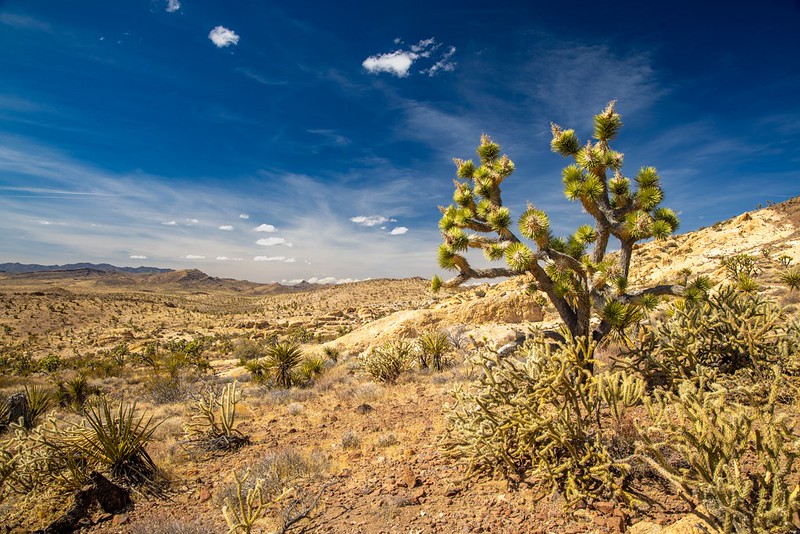
On August 8, 2023, President Biden took a significant step by designating Baaj Nwaavjo I’tah Kukveni in Northern Arizona as a national monument. The name is a combination of the Havasupai “Baaj Nwaavjo,” meaning where Indigenous people roam, and the Hopi phrase “I’tah Kukveni,” meaning our ancestral footprints. This designation, located near the Grand Canyon, serves as a protective shield against future uranium mining in the region.
This land is sacred to over a dozen Tribal Nations, and Indigenous groups have been working to safeguard it since the 1980s. The new monument protects approximately 900,000 acres and solidifies the 20-year ban on mining that President Obama initially put in place in 2012.
These and other recent efforts by the Biden Administration to protect lands from future mining prompted us to examine how NCAI’s historical advocacy has shaped current mining issues.
Current mining activity in the United States rests on a law dating all the way back to 1872— the General Mining Act. This law was put into effect during a time of intense mining activity in the West, shortly after the Civil War, and was signed into law by President Ulisses S. Grant. The law allows individuals and private mining companies to lay claim to mineral resources on public land, essentially saying that these minerals are open to exploration without having to pay anything back in the form of royalties to the government.
It is hard to comprehend that a 160-year-old law, one that is surely outdated and in need of reform, still directs most mining activity today. Earlier this year, NCAI issued a Policy Brief on Reform of the Mining Act. This brief emphasizes that the majority of minerals needed for sustainable energy are located within 35 miles of Indian reservations. It stresses that as the critical minerals industry grows for clean energy, we must take steps to protect Tribal Nations’ land, natural resources, and the right to make their own decisions. Suggested reforms to the Act include the incorporation of Indigenous knowledge into the decision process, and a standardized process for tribal consultation.
Throughout the years, NCAI has adopted several resolutions calling for the reform of the General Mining Act. The most recent call for reform was made at the 79th Annual Convention & Marketplace in Sacramento, California, in 2022. The resolution, “Support for Mining Reform to Protect Sacred Sites,” calls for changes to the law to reflect the current mining landscape, and to consider that untapped mineral deposits are often located near tribal lands. The resolution also highlights that the existing law “poses a serious threat to Tribal Nations’ natural resources, cultures, ceremonies, traditional-and-sacred places, and ways of life.”
There are many resolutions, policy positions, and events related to mining, with some key historical moments worth highlighting. Beginning in the late 1940s, we first see mining addressed in NCAI records. Leaders were deeply concerned about the arrival of uranium mining on Navajo and Hopi lands. Their worries extended beyond the environmental impacts and to the well-being of Navajo miners.
For reference, according to the EPA, between 1944 and 1986, approximately 30 million tons of uranium were extracted from Navajo reservation land. This uranium was used to build the nuclear arsenal during the Cold War. Then, as the era came to a close and the demand for uranium declined, mining companies abandoned their operations on Navajo land. This left more than 500 abandoned mines and a devastating legacy of health problems for those who suffered from uranium exposure.
Another key moment was in 1974 when NCAI brought members together for the inaugural Indian Energy Resources Seminar in Billings, Montana. In an introductory letter, NCAI Executive Director Charles Trimble stated that, “Congress and the Administration are concentrating more and more on the development of energy resources. The recent energy crisis has shaken the country into a policy of “national independence” in natural resources. Undoubtedly, this means there will be a concerted effort made to develop and exploit the resources of Indian tribes, many of which have a wealth of untapped resources.”
The three-day meeting was designed to not only unite Tribal Nations in developing strategies to protect their resources against exploitation but also to develop those resources positively for their own benefit if they chose to do so.
By the mid-1970s, the expanded need for resources led to increased pressure on strategic tribal resources. Tribal land was, and continues to be, a target for exploitation— and as decades progress, we see an evolution in NCAI’s advocacy and engagement on mining issues. Native organizations and advocates, including NCAI, have stood with Tribal Nations as stances evolved from defense to a push for complete control and self-determination over their own resources.
 The Sentinel