
Far from a household name, few people are aware of how the Farm Bill affects their day-to-day lives and well-being. First, it’s helpful to look back at the origins of the Farm Bill. The very first Farm Bill predates the formation of NCAI and was enacted in 1933 as part of President Franklin D. Roosevelt’s New Deal. The First Farm Bill, known as The Agricultural Adjustment Act, had three main goals: to maintain fair food prices for farmers and citizens by controlling prices; to ensure access to food; and to protect natural resources. This legislation arose out of the economic devastation of the Great Depression and the environmental effects of the Dust Bowl. Although the times and economic circumstances have changed since then, the purpose of the Farm Bill has largely remained the same–to govern and establish regulations relating to agriculture, nutrition programs, food policy and production, and rural development.
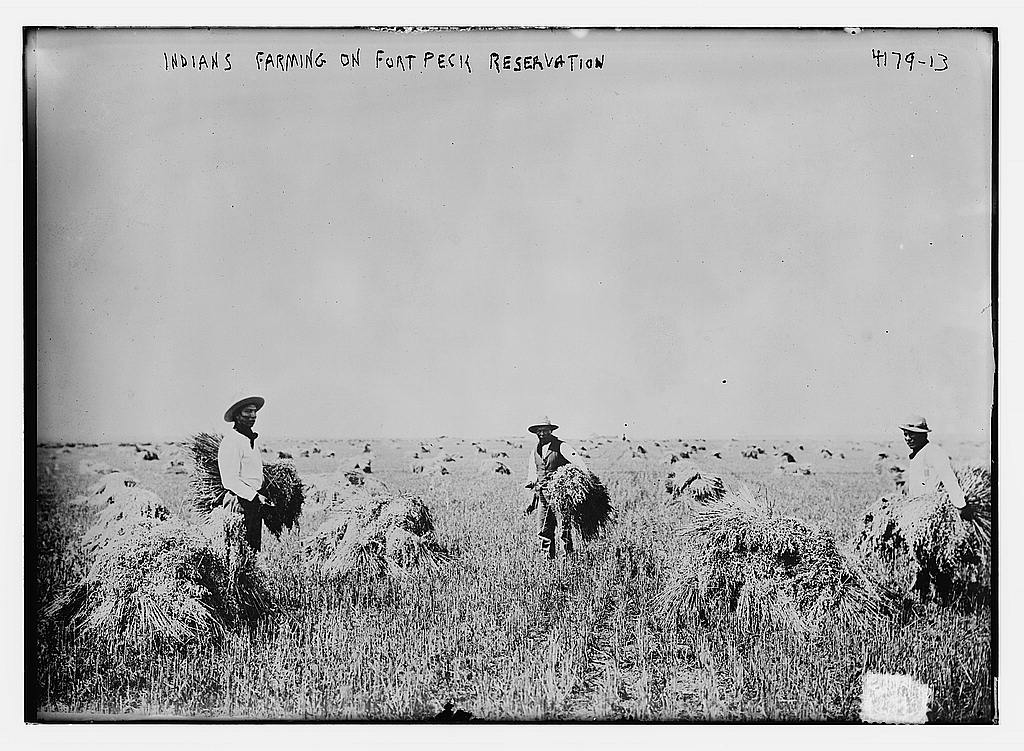
There are many ways in which the Farm Bill relates to Indian Country. Agriculture is one of the largest economic industries in Indian Country. The Farm Bill includes programs to support farmers, promote sustainable farming on Tribal lands, and support rural economic and workforce development opportunities that can benefit Tribal communities, as well.
Likewise, The Farm Bill can impact food sovereignty by encouraging local food production using traditional indigenous practices, the cultivation of cultural foods, and access to those foods by tribal citizens. Through these methods, Tribal citizens can access culturally appropriate foods in their communities.
Moreover, every Farm Bill since 1973 has included funding for nutritional assistance programs. The Supplemental Nutrition Assistance Program (SNAP) and Food Distribution Program on Reservations (FID- IIIPER), address food insecurity and access to nutrition in Tribal Communities. There are many more ways in which the Farm Bill affects tribal communities including providing loan and grant programs for farmers and ranchers; conservation programs; rural business development; and providing crop insurance to farmers.
Despite its vast scope, historically the Farm Bill has left out the perspectives and input of Indian Country. For decades, NCAI’s advocacy has centered around tribal consultation and the inclusion of the needs of American Indian and Alaska Native people when drafting and reauthorizing the Farm Bills. As an example, during the 2012 reauthorization of the Farm Bill, NCAI adopted several resolutions calling for Indian-specific provisions to be included in the legislation draft. One resolution called for a specific Indian Agriculture Act table to be included in the bill.
Then at the 2013 Mid Year Convention in Reno, Nevada, NCAI adopted a resolution calling on the US Congress to fulfill its federal trust responsibility by incorporating parity, opportunity, and consistency into the Farm Bill. And then approaching the 2018 reauthorization, we see NCAI collecting farm bill recommendations from its member Tribal Nations for use in its advocacy.
Policy resolutions were not the only means of advocacy. At the 2017 Annual Convention, NCAI, along with several partners, formed The Native Farm Bill Coalition. The coalition is currently a nationwide group of more than 170 Tribal Nations, and organizations, whose goal is to ensure that Indian Country’s input is included in the decisions for each subsequent Farm Bill.
The most recent Farm Bill, The Agriculture Improvement Act, is the 18th Farm Bill and was adopted in 2018. For the first time ever, it contained 63 tribal provisions designed to include Indian Country’s needs in the areas of agriculture, food sovereignty, conservation, economic and workforce development initiatives, and nutrition. The 2018 Reauthorization was the result of advocacy by NCAI and the Native Farm Bill Coalition members.
 The Sentinel